Garden Notes from the Understory
In this edition we turn to the understory — the shaded, layered world beneath the canopy where structure, leaf litter, and low‑growing life matter just as much as flowers. It’s a place full of cues for how we can rewild our own gardens: by tending the dimmer layers, restoring the textures that wildlife depends on, and letting even small spaces echo the rhythms of the larger forests they once belonged to.
A Guide to Layered Ecology
Did you know Highbush Blueberry (Vaccinium corymbosum) supports nearly 300 species of moths and butterflies in our region, or that Black Cherry (Prunus serotina) provides for more than 450 species? Though they are much more than a link in the food web, the importance of Lepidoptera in this cycle cannot be overstated. They form a foundational mechanism for turning sunlight into protein, which then fuels everything from tanagers in the canopy to fungi like Cordyceps militaris underground.
Today we’re going to explore high‑ecological‑value plants we may be able to incorporate into our own spaces. We’ll approach this from the lens of bolstering wildlife habitat, which can look quite different depending on the species in mind. Much of it returns to the same humble truth: insects are the quiet engine of life, and every animal is essentially a plant, reorganized.
By planting both native and intentionally, we can quite literally build life — and invite in the life that makes us feel alive.
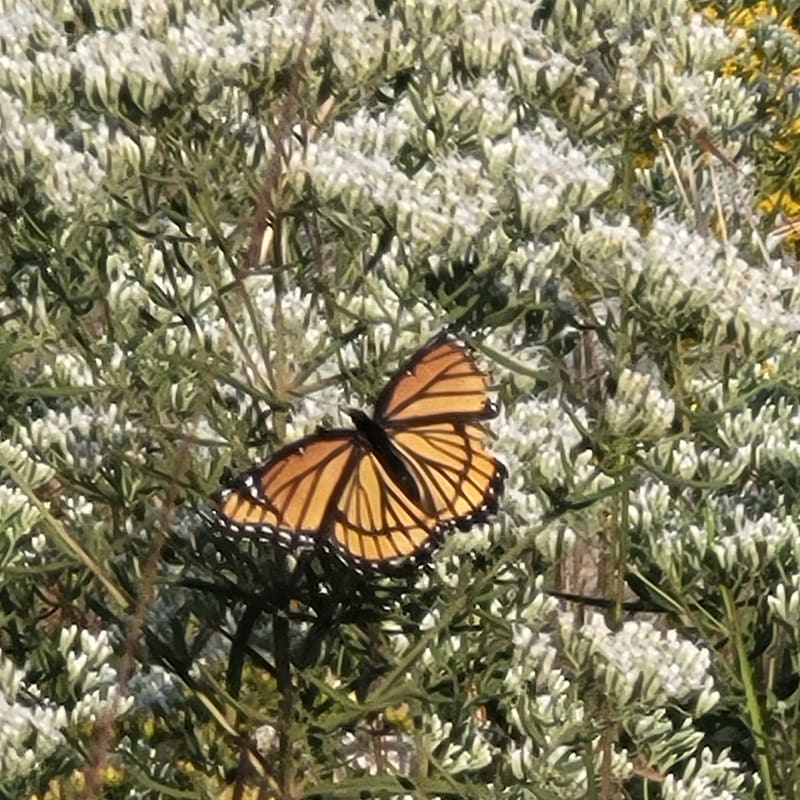
Viceroy on boneset
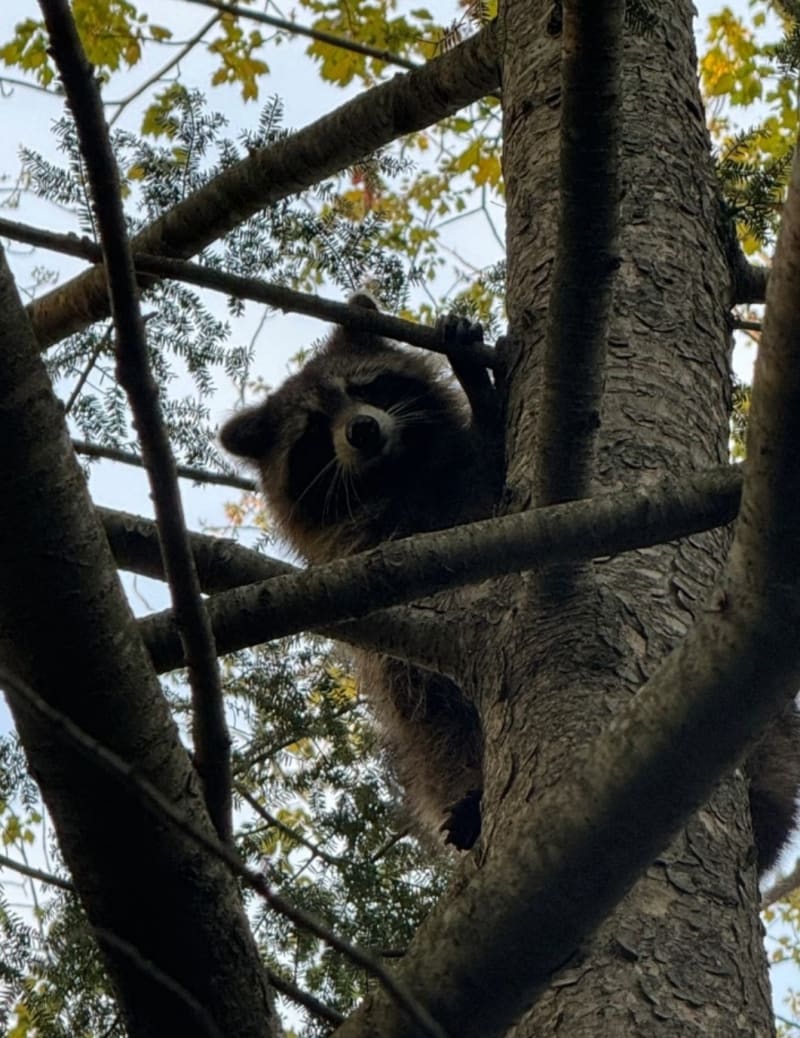
Racoon
First, it’s helpful to set an intention. Are we trying to attract hummingbirds? If so, we need to think about creating habitat for spiders. Although hummingbirds are commonly thought of as nectar lovers, they are also fiercely insectivorous, and spiders make up almost 80% of their diets. You don’t travel from Mexico to Canada on sugar alone; protein is essential.
Some hummingbird species even use spider silk to bind their nests, since the elasticity allows the nest to expand as the chick grows. To offer that kind of habitat and structure, we can build contour and layers on the ground with leaf litter and other plant debris, and we can leave sturdy stems of Ironweeds (Vernonia) or Joe‑Pye-weed (Eutrochium). These simple choices create easy access to these buffets and allow us to witness lesser‑seen behaviors of these beloved birds.
Now that we’ve covered the 80% of a hummingbird’s diet, we can talk about the prettier 20%: nectar‑producing blooms. It would be silly not to start with the flower that ushers them into the state each spring, Aquilegia canadensis, our native red columbine. If you have space for a vine, Coral Honeysuckle (Lonicera sempervirens) is a cherished midsummer sugar source with its gorgeous tubular red flowers. Beebalms (Monarda) and Lobelia species are also prized by hummingbirds, and they support a wide diversity of both day‑ and night‑flying pollinators.
No species in its native ecosystem exists as an island. Removing either the spider or the cardinal flower from the hummingbird’s world is like removing the spark plugs or the gas tank from a car and expecting to drive to work tomorrow.
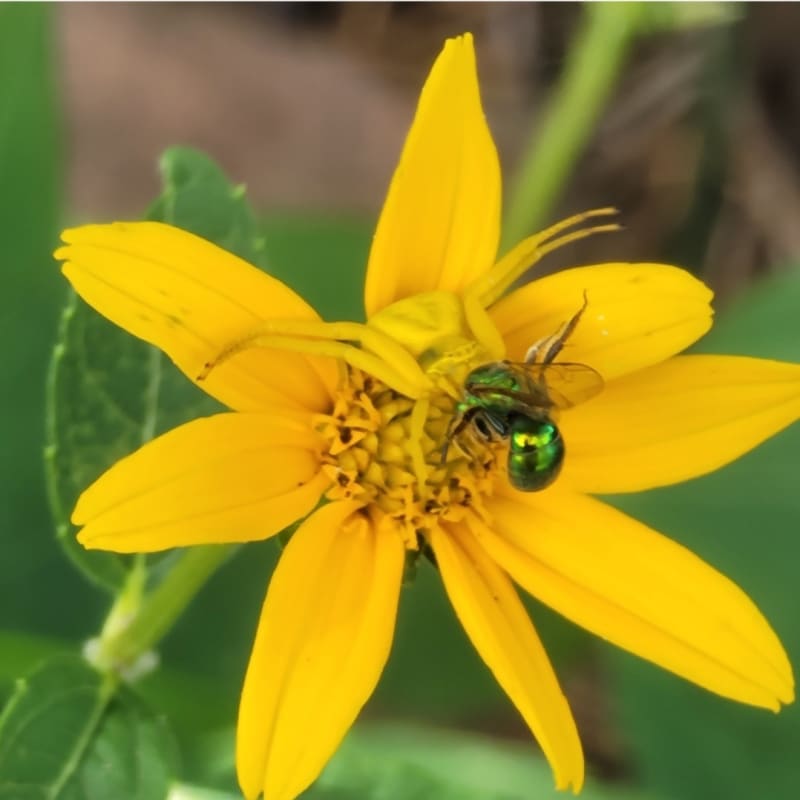
Spider snacking on a flower
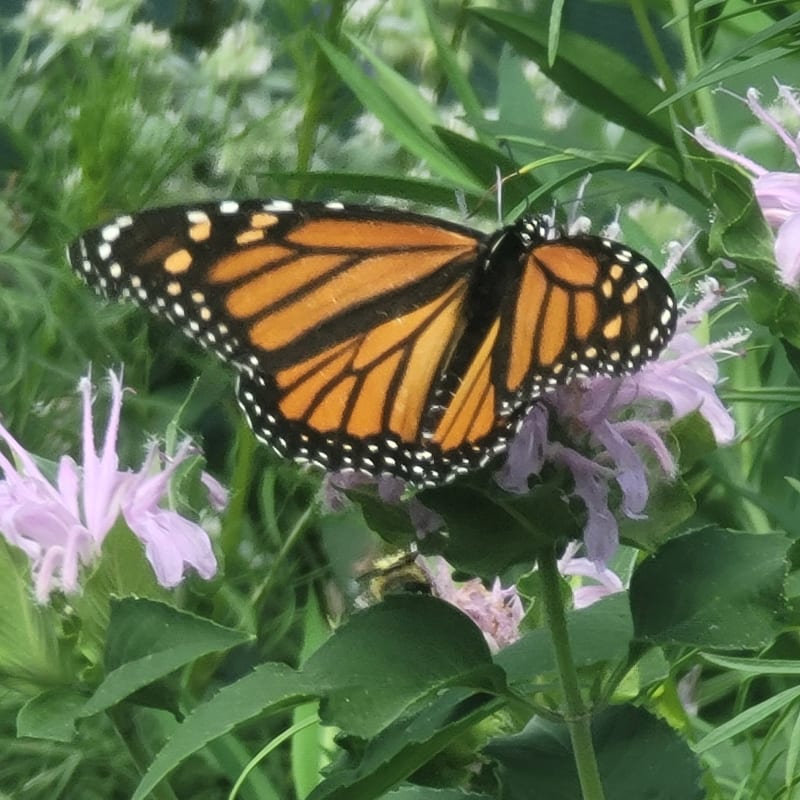
Monarch butterfly on beebalm (host plant milkweed)
While the architectural, spidery needs of the hummingbird are essential, gardening for bumblebees can often feel a bit more traditionally “pretty” while being just as functional. Many of our most beautiful buzz‑pollinated flowers, like Highbush Blueberry, are also powerhouse host plants for hundreds of species of Lepidoptera, feeding many branches of the tree of life over the course of a growing season.
Male bumblebees often sleep close to the blooms, so low‑growing species like sedges or Packera can offer safe places to spend a warm summer night. Using our gardens to bolster pollinator populations means planting with the goal of creating consistent blooms, providing a steady supply of protein‑rich pollen.
A true habitat isn’t complete without overwintering space such as leaf debris, woody decay, or the hollow stems of soft‑woody plants. Even the sturdy stems of goldenrod (Solidago), milkweed (Asclepias), or blazing stars (Liatris) can serve as essential winter refuge. Resisting the urge to preemptively tidy up may be one of the best moves you could make in the eyes of a Bombus.
I’d be doing a disservice to my beloved Bombus if I didn’t mention that honeybees can be detrimental to the gene pool of native plants and to native insect populations. Native pollinators produce higher seed sets and promote greater genetic diversity within native plant communities. Honeybees, on the other hand, have a hoarding habit. They harvest hundreds of times more pollen and nectar than bumblebees while offering far less back to the ecosystem at large.
Studies have also shown that native pollinators, including moths, achieve a higher flower‑to‑fruit ratio than honeybees on tree crops like apples. Planting buzz‑pollinated flowers — such as Gentians, Senna, Partridge Pea, or Primulas — helps guarantee some degree of food security in the garden. It’s not uncommon to find honeybees covering your generalist flowers, essentially strip‑mining them of their communal floral functions.
Honeybees are livestock, not wildlife.
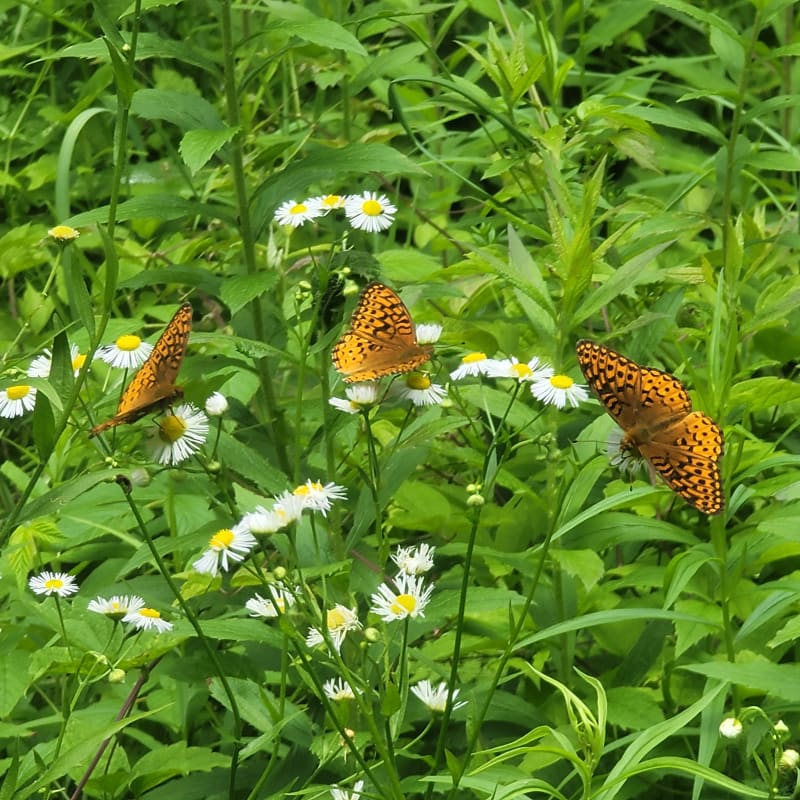
Fritillary butterfly on fleabane (host plant Violet)
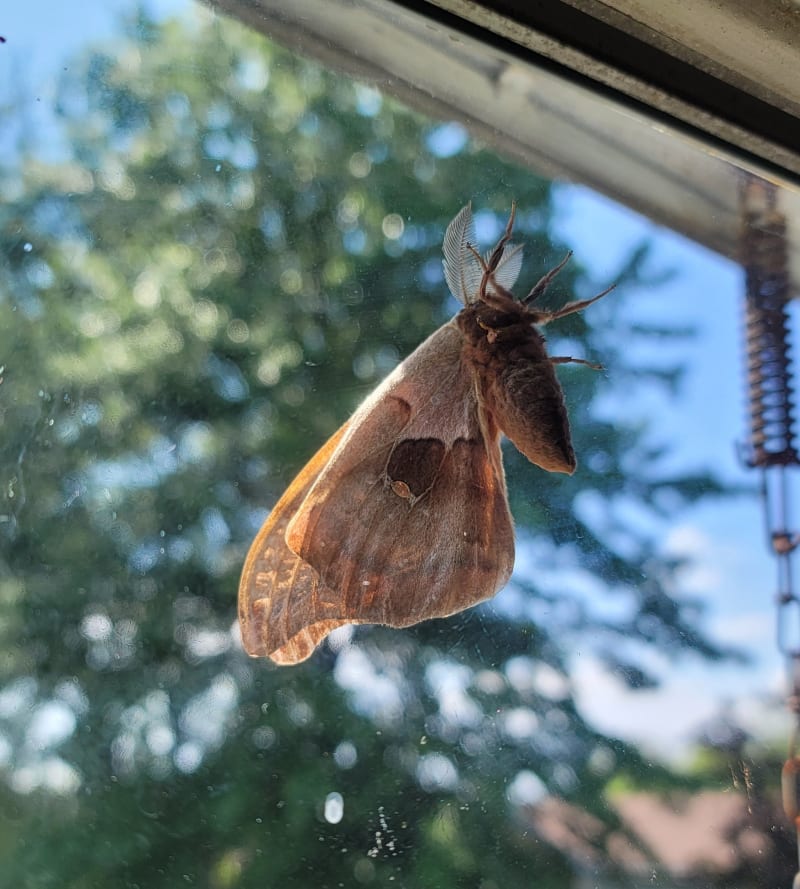
Giant Silk Moth (host plants: oaks,willow, maple, hickory)
If your property has the privilege of mature tree cover, you can be the steward of a sort of “high‑rise ecosystem” that looks quite different from the gardens mentioned earlier. In the living world, life is distributed across vertical layers, and the goal of a woodland garden is to fill the empty space between the canopy and the soil. Large oaks (Quercus) and maples (Acer) provide the top layer and host hundreds of moth species, but they need an understory to function as a complete habitat.
By adding smaller, shade‑tolerant trees and shrubs such as Witch‑hazel (Hamamelis virginiana), Spicebush (Lindera benzoin), or Serviceberry (Amelanchier), you provide mid‑level cover along with early spring pollen, insects, and browse that forest‑dwelling birds and insects rely on. Though very pretty, this isn’t about aesthetics; it’s about managing the microclimate. A layered garden holds more humidity and stays cooler than an open lawn, which protects the soil from drying out.
Below the shrubs, the ground layer can be filled with native species like sedges, sedums, ferns, and spring ephemerals (always garden‑ or greenhouse‑grown, never taken from the wild). This style of gardening creates opportunities to support specialists such as the spring beauty miner bee (Andrena erigeniae) and other bees whose lives revolve around short‑lived, quiet woodland blooms a rather fragile life cycle.
A functional woodland requires leaving the “duff” (the fallen leaves and decaying wood) to rot in place. This natural carpet provides thermal insulation and nutrient recycling that allows the entire system to persist, feeding plants, insects, and the fungi that keep our trees healthy and more disease‑resistant. Another essential function of this duff layer is that it serves as overwintering habitat for many of our moths and butterflies. A high‑functioning woodland can act as a nursery for hundreds of species of beneficial insects that our ecosystems will greatly appreciate in the coming seasons.
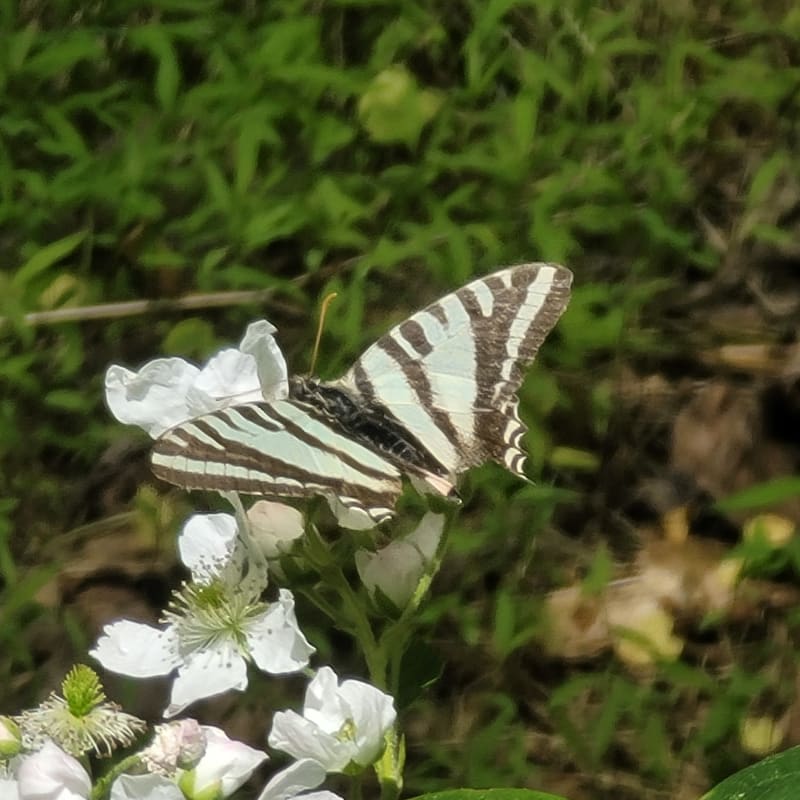
Zebra swallowtail on a blackberry flower (host plant pawpaw)
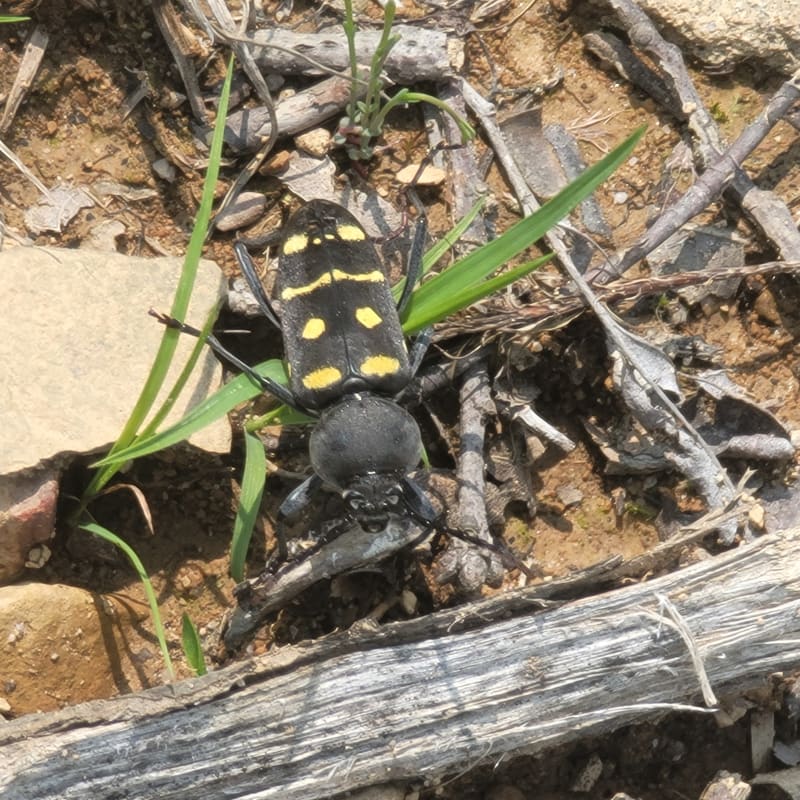
Round-neck longhorn beetle
I hope this article has offered some fresh perspective on what a garden can be, what creating habitat truly means, and perhaps a new lens through which to view your trees. You may have noticed this wasn’t a particularly flower‑heavy conversation. Truthfully, there is no shortage of flower‑rich gardens, but there is a real lack of urban and suburban spaces that provide the structural needs wildlife require in order to multiply.
When we choose to plant for the specialist bee, the predatory spider, and the pupating moth, we are doing more than “landscaping.” We are curating a functioning fragment of the Pennsylvania wilderness. It may be more impactful to start viewing our yards as potential primary infrastructure for life. By surrendering the old idea of “tidy” and embracing the textured, layered reality of a wild space, we transform our properties from stagnant plots into active nurseries and incubators.
In the end, a successful garden isn’t measured by the brilliance of its blooms, but by the unbroken chain of life it sustains long after the flowers fade. It is an act of restoration, a quiet rebellion against the sterility of the modern landscape and its horticultural atrocities, and a commitment to ensuring that the wild interior of our state has a place to call home.
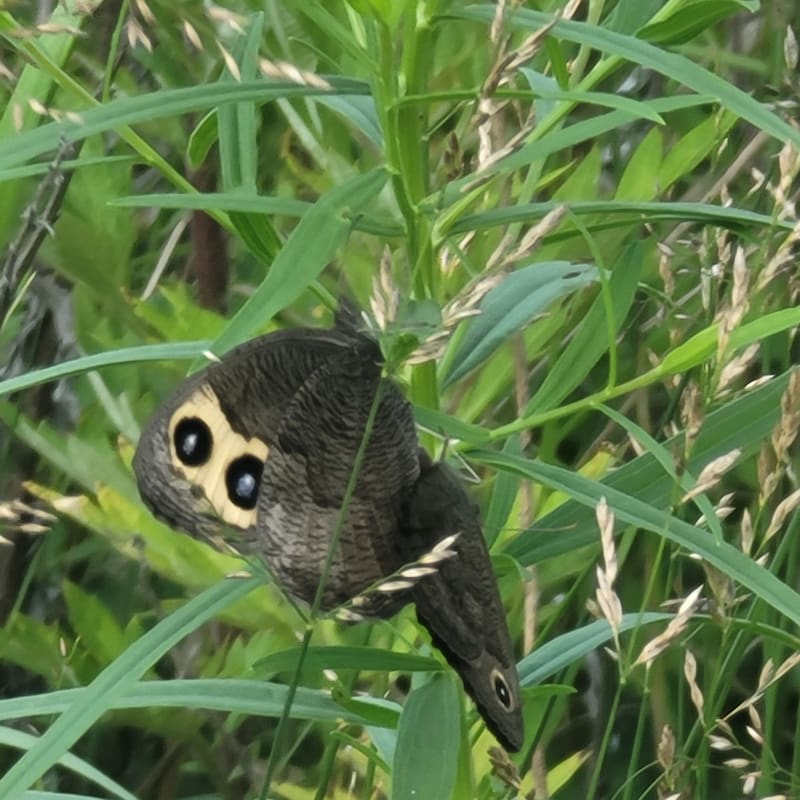
Wood nymphs mating (host plant tridens, little bluestem)
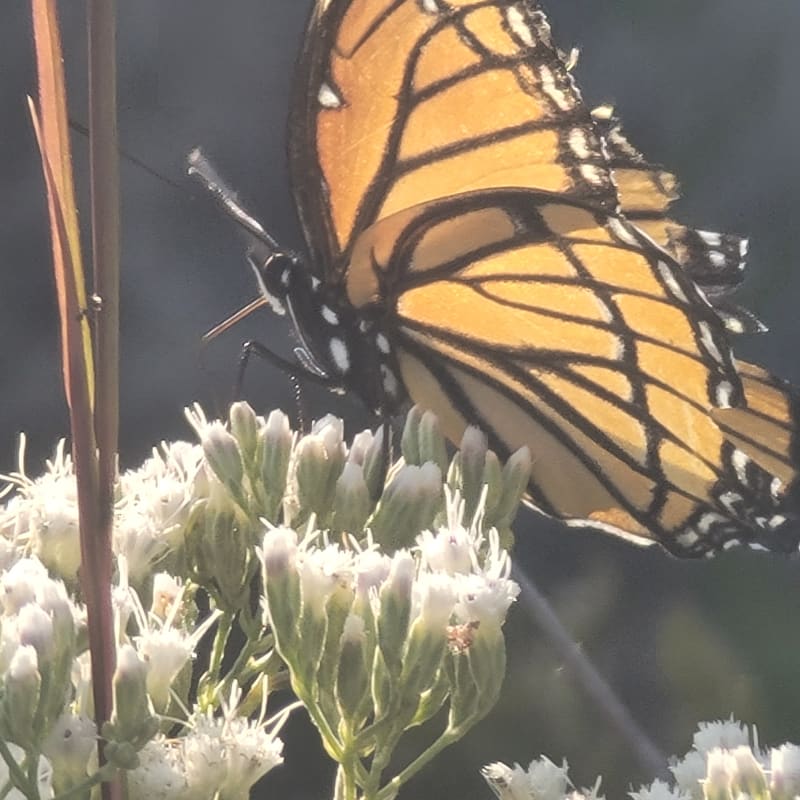
Viceroy butterfly on boneset
The human, like the beaver, is a landscape architect. We have altered and maintained ecosystems for as long as we’ve been part of them. We are stewards, members of the ecosystem, and beacons of life. But we are entering a new phase of loss, as wild spaces are put in jeopardy, public lands face increasing pressure, and data centers threaten waterways and farmlands. Bombs destroy global biodiversity hotspots on land and sea, endangering entire human and ecological communities.
Please attend local meetings around proposed data centers in your area and voice your opposition. Consider participating in local politics and supporting people who value the living world. Sign petitions to defend public lands. Join invasive‑species removal days at your local preserve — or start one, if you can. We can re‑wild our own spaces, but we must also adamantly oppose the un‑wilding of the priceless wild areas that remain.
Sincerely, a creature of the oak–hickory woodlands, Noah Cawthon