Field Notes from Early Summer
In this edition, Colin Gillette brings us into the damp, shaded edges of early‑summer forests and into the ancient lineage of the royal fern family. His piece follows the Osmundas through June, tracing their distinctive fertile structures, remarkable biology, and deep evolutionary history, and reveals how these ferns remain some of the most enduring presences in our Pennsylvania woods.
The Osmundas - Ancient Ferns of the June Forest
June has just begun and the transition from spring to summer is under way. The spring ephemerals have largely disappeared, and the leaves of the forests are now fully opened — even on the highest peaks — shading the forest floor below with lush, bright green. Before the full onset summer wildflowers and the heat and humidity that accompanies them this is another good time to turn some attention to the ferns of the forest. At this point most of our ferns have fully emerged, or nearly so, and one of our most interesting groups of ferns to seek belongs to the family Osmundaceae (royal fern family).
Osmundas typically grow in moist to wet shaded areas of the forest and can grow very large with fronds potentially reaching over six feet in length. One of their most distinctive features however is their sporangia or spore cases. In most ferns, you will find the spores hidden on the underside of fertile fronds which are typically very similar in appearance to the sterile fronds. In Osmundas, the sporangia are large and on modified pinnae of fertile fronds, separate and distinct from the pinnae of the sterile fronds. The sporangia of each of the three Osmunda species in Pennsylvania are distinct and the easiest source of identification, when present. After dispersing their spores, the sporangia turn a rich brown color, the feature that gives the cinnamon fern (Osmundastrum cinnamomeum) its name, and they wither away soon after the spores have been released.
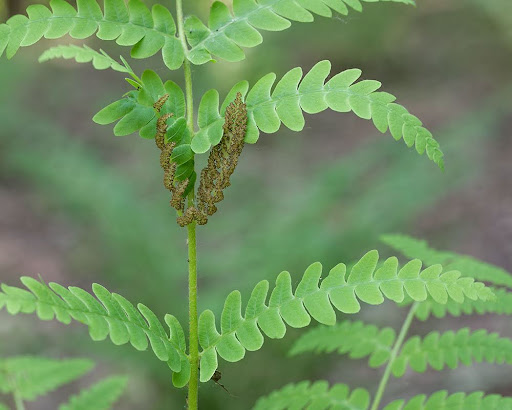
Intermediate fern sporangia after dispersing spores
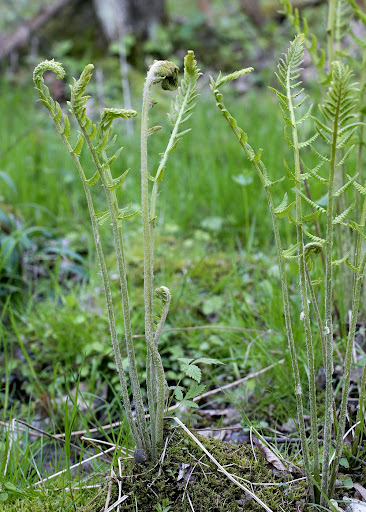
Unfurling cinnamon ferns
Another fairly unique feature is that the Osmunda ferns have green spores (contain chlorophyll) which remain metabolically active after dispersing. Because their spores remain metabolically active, they have only a short window of viability (from a few days to a few months) to germinate before their stored food is depleted to the point that they can no longer do so. Most ferns do not have green spores (only about 7% of ferns have green spores), do not use up their food stores, are slower to germinate and can remain dormant in the soil for many years until the conditions are right for germination. The ostrich fern (Matteuccia struthiopteris) and the sensitive fern (Onoclea sensibilis) are two other ferns in Pennsylvania that produce green spores. Interestingly, the Osmundas, ostrich fern and sensitive fern are most prevalent where moisture is typically high which would be conducive to quick germination when time is limited (spores need moisture to germinate).
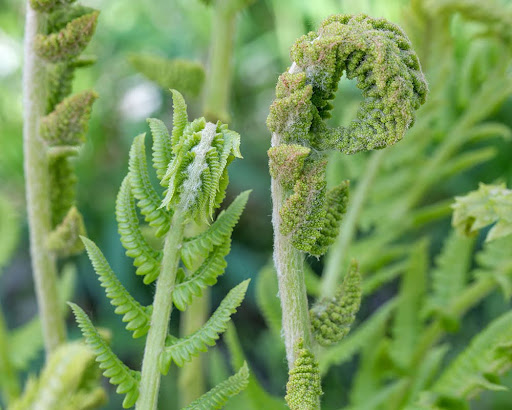
Up-close view of sterile and fertile unfurling cinnamon fern fronds
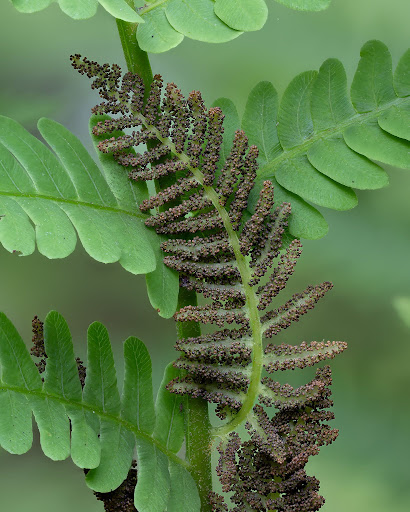
Interrupted fern with mature sporangia
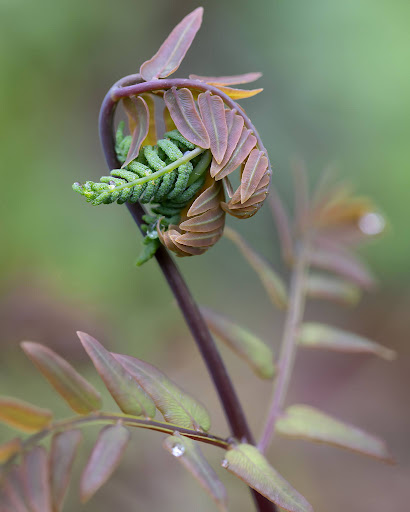
Unfurling royal fern frond
Osmunda ferns are some of the most ancient plants on the planet with fossils dating more than 300 million years old (flowering plants have only been around for about 130 million years). All parts of the Osmunda ferns are very tough and durable which has allowed them to fossilize very well providing an amazing account of their ancient history. Not only do Osmundas have a 300+ million year history, they have changed very little over that immense span of time. An Osmunda fern you find now would be virtually identical, at least in visual appearance, to Osmundas that were growing before and during the time of the dinosaurs. We are lucky enough to have three species of these ancient Osmunda ferns in Pennsylvania.
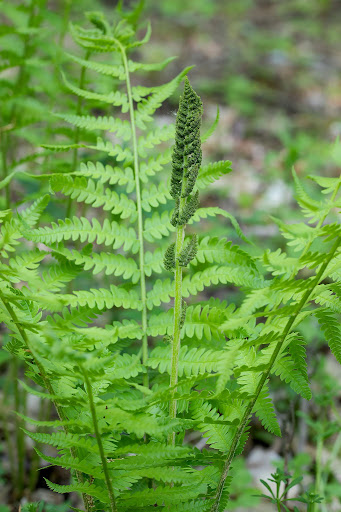
Cinnamon fern
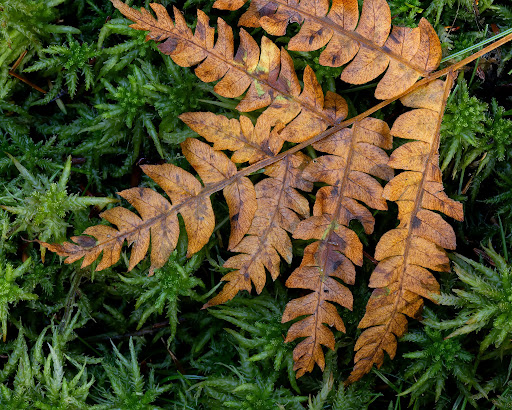
Dry cinnamon fern frond
The royal fern (Osmunda spectabilis) is actually the least 'fern-like’ of the Osmunda ferns. It could easily be thought of as a bush or shrub with locust-like leaves (pinnae in ferns) when first encountered. Royal ferns can be found in wet wooded areas, along stream banks, marshes and bogs. The royal fern is more tolerant of less shaded areas than the other Osmundas as long as the ground maintains enough moisture. While the bushy fronds easily distinguish the royal fern from the other Osmundas, its sporangia are also very distinctive. The sporangia of the royal fern are densely clustered on modified pinnae branching from the end of the fertile frond which otherwise looks just like the sterile fronds.
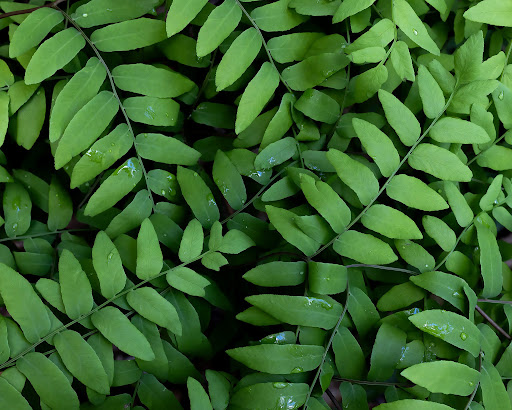
Royal fern fronds
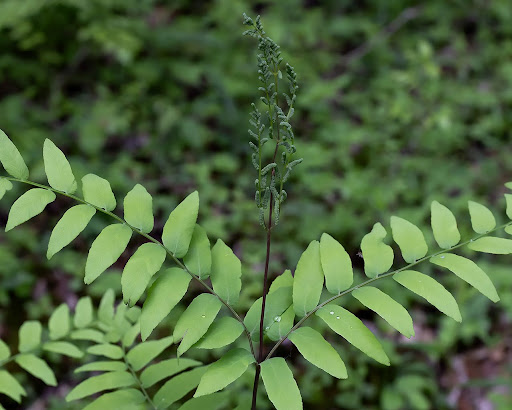
Immature fertile and sterile fronds of royal fern
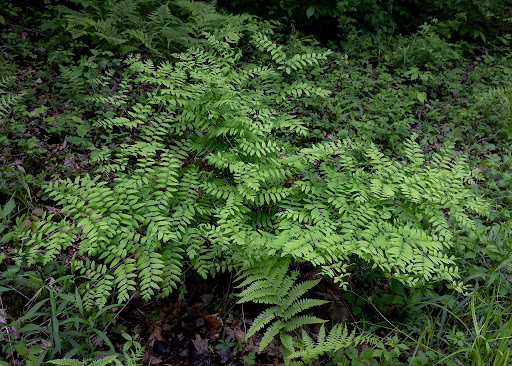
Royal fern plant form
The interrupted fern (Osmunda claytoniana) is the first of the Osmunda species I ever found so it tends to be my favorite to come across. Like other Osmunda ferns, the interrupted one can be found in wet areas, however it is less tolerant to highly saturated areas and is more tolerant of well-drained areas. I have found interrupted ferns growing in areas of the forest far from any waterway or standing water. Interrupted ferns have large, arching, lance‑shaped fronds, and when fertile fronds are present, the species is especially easy to identify. The fertile fronds bear several pairs of fertile pinnae in the middle of the blade, “interrupting” the sterile pinnae.
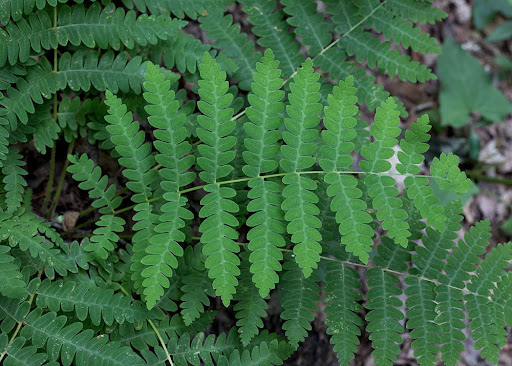
Interrupted fern fronds
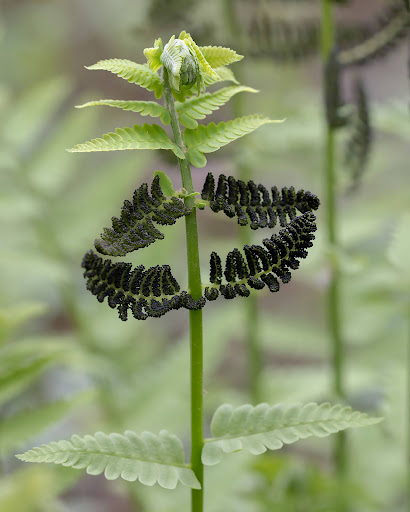
Fertile frond of interrupted fern with developing sporangia
The cinnamon fern (Osmundastrum cinnamomea) has recently been separated from the other Osmunda species. Thanks to molecular phylogenetics, the cinnamon fern is now the sole species in the genus Osmundastrum. Regardless of their genes, the cinnamon fern and interrupted fern can be difficult to distinguish since they both have large, stout, arching, lance-shaped fronds with similar pinnae and can be found in similar habitats. I have found cinnamon and interrupted ferns only a few feet apart. Cinnamon ferns grow only in very wet areas and their most distinguishing feature is again, the fertile frond. The fertile fronds of the cinnamon fern emerge before the sterile fronds and have only globular clusters modified pinnae containing the sporangia hugging the rachis (stem). The fertile fronds do not last long though and will have withered and fallen over by mid-summer.
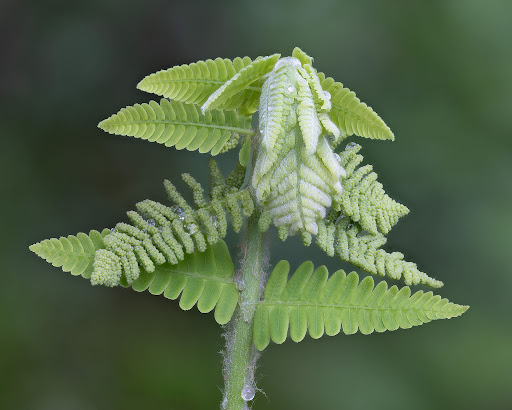
Unfurling interrupted fern frond with fertile pinnae
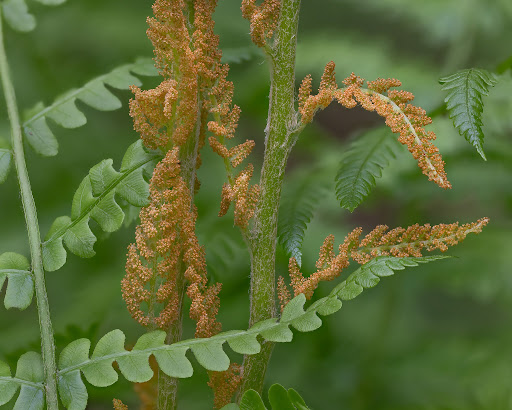
Cinnamon fern sporangia after dispersing spores
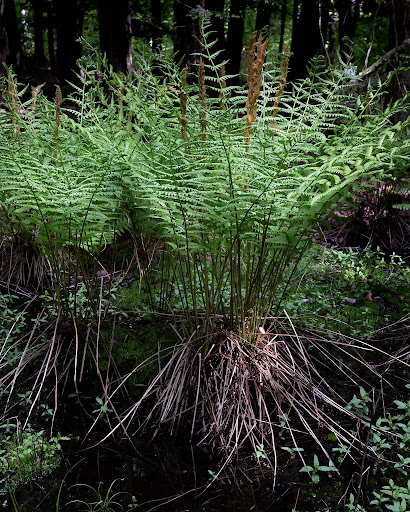
Cinnamon fern in typical wet habitat
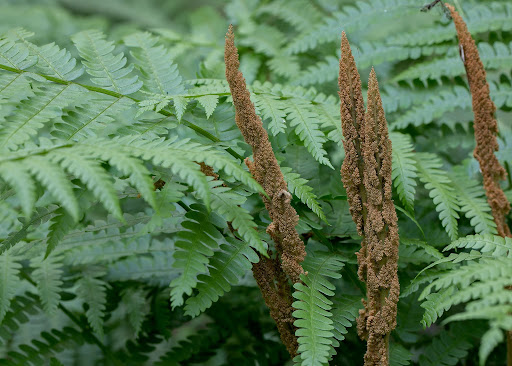
Fertile cinnamon fern fronds with mature sporangia and sterile fronds
The Osmunda ferns are truly one of the great treasures of our Pennsylvania forests. The more I learn about them the more I appreciate them. You will not find many organisms with a history reaching so far back in the time of our planet. The relative abundance of these ferns, and the accessibility we still have to these amazing organisms, is a testament to their resilience and hopefully a legacy that will continue for a few more hundred million years.