Field Notes From the Fringe
In this edition, we’re delighted to introduce a new voice to PAEnflowered — a fellow plant enthusiast whose field-based curiosity and love for unusual habitats bring fresh perspective to our shared exploration. At 27, he’s an avid hiker and self-taught naturalist who spends much of his time seeking out the rare and resilient plants of Pennsylvania’s bogs, shale barrens, swamps, and wet meadows. Though he comes without formal training, his dedication to learning in the field reflects the heart of what PAEnflowered stands for - community-rooted discovery and care for the living world. His contribution in this issue centers on a plant community that thrives in one of these overlooked ecosystems — a place where soil, water, and light conspire to shape botanical relationships that are both fragile and fierce.
A Niche Amongst The Scour
In between the boat launches and bike paths of the Susquehanna lie floodplain scours - harsh, rocky shores prone to scour by ice and high velocity flooding. And like all harsh places, a unique plant community calls it home. Such large stones adjacent to the river create a mosaic of microhabitats, barrens, fens, and wet meadows. Scrublands paint the uneven shoreline, while the rocky floodplain forest interior is a much richer, more sheltered riverside ecosystem.
At the outer edge of the habitat, American sycamore, river birch (B. nigra), silver maple (A. saccharinum), and black willow (S. nigra) litter the scour, often growing sideways, longer than they are tall due to the frequent flooding. Shrubs like false indigo (A. fruiticosa), buttonbush (C. occidentalis), silky dogwood (C. amomum), and winterberry holly (I. verticillata) fill in the gaps on the forest and scour edges forming short, dense thickets in response to the constant stress, creating vital habitat to a wide range of birds that forage and hunt these rocky river outcrops both seasonally and year round.
A personal favorite, Hibiscus leavis can be found in relative abundance here tucked amongst plants like water willow (J. americana), culvers root (V. virginicum), yellow loosestrife (L. vulgaris), jimsonweed (D. stramonium), frogfruit (P. lanceolata), cardinal flower (L. cardinalis), and many more.
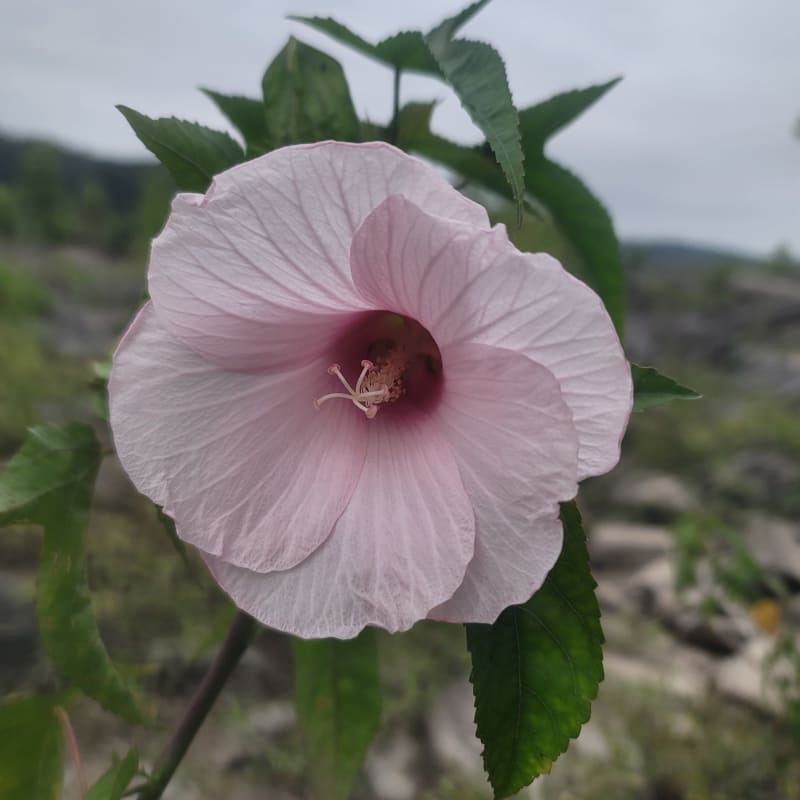
Smooth rose-mallow (Hibiscus leavis)
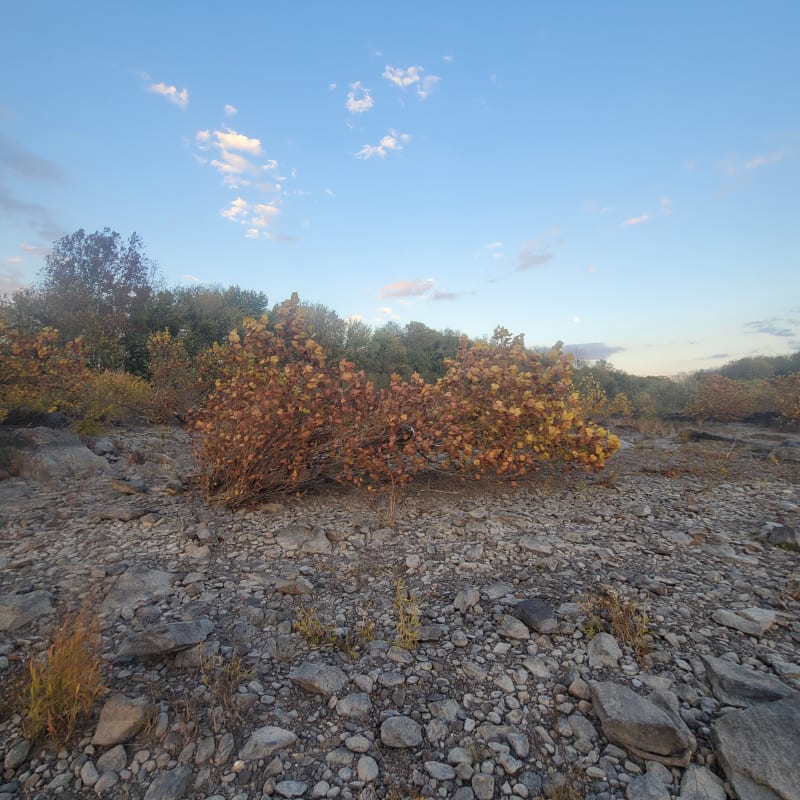
Sycamore normally growing approximately 20 feet long, here is only around 10 feet long is a great example how how harsh flooding shapes even the strongest of trees
On the floodplain forest interior, you have an overstory composed of sycamore, basswood, silver maple, river birch, persimmon, pawpaw, ash, elm, and surprisingly a star player in this habitat, swamp white oak (Q. bicolor). Technically swamp white oaks don’t often truly make it to the overstory here, most grow in areas prone to log jams, so they form midstory thickets in abundance alongside spicebush (L. benzoin), witch-hazel (H. virginiana), and hawthorn (C. crus-galli). In the spring the understory shines with dutchmans breeches (D. cucullaria), bluebells (M. virginica), waterleaf (H. virginianum), and fawn lillies (E. album and E. americanum). Summer gives way to eupatorium, helianthus, ipomea, sedges, multiple species within each genus put on one hell of a summer woodland bloom, if you can dodge the poison ivy on your way.
Perhaps the easiest diversity to overlook is the grasses. With barren and swamp habitat stacked on top of one another, the diversity is rich. I’m far from a grass guy but in my journey to become one, I went searching. I found big bluestem (A. gerardi), little bluestem (S. scoparium), bottlebrush (E. hystrix), Tridens, Sporobolus, Dichanthelium, and many others in a day adventure over a few scoured sites. Aside from being host species to many skippers, nymphs, and moths, this grassland acts as an anchor, stabilizing much of the bank by rooting meters deep. Grasslands are also better at sequestering carbon underground than forests because around 90% of a grass’s carbon is in its roots, whereas forests typically hold about 45% of their carbon underground,and generally are not as diverse of an ecosystem if comparing total species.
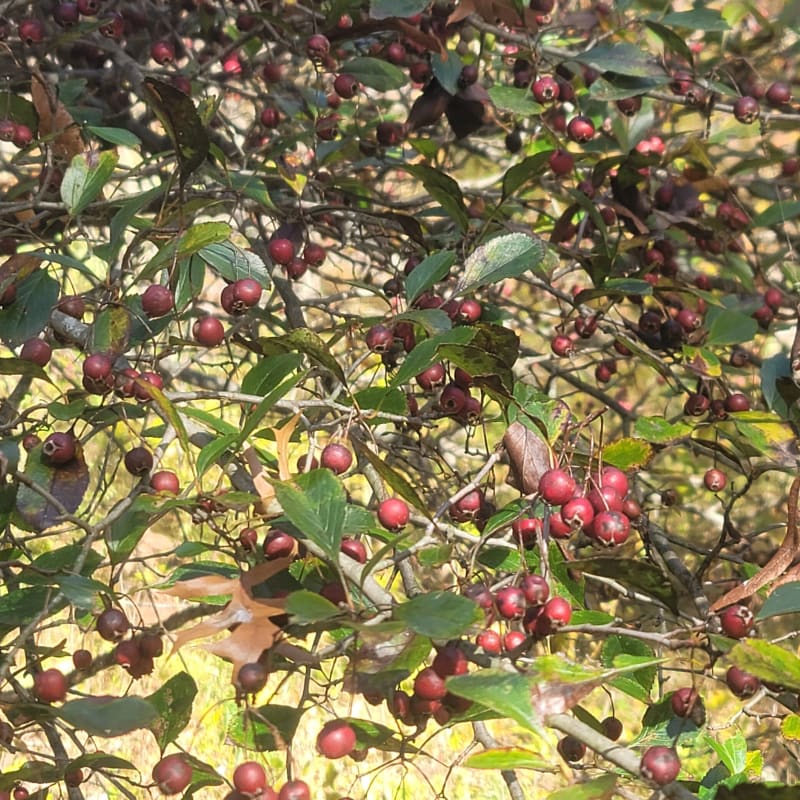
Crataegus crus-galli scatter the shady understory providing spatters of red through the understory in the fall.
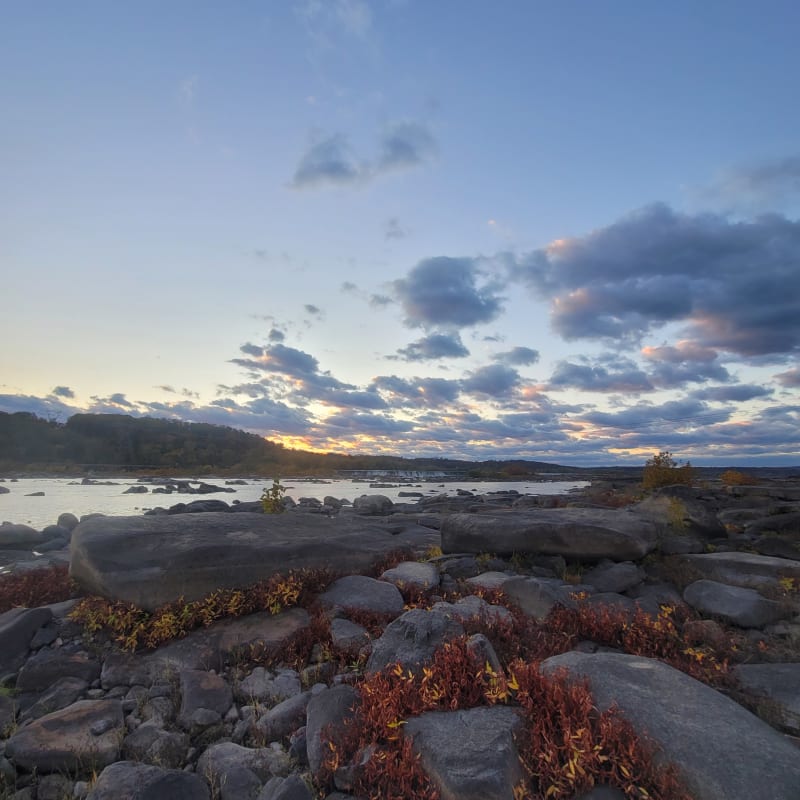
A scour on the east shore on sunset
What are these plants creating? Habitat! For all kinds of salamander, turtles, birds (both large and small), fox, and turkey are just some of the animals I’ve seen call this scour home. Thickets formed by dogwood have obvious scrapes under them, showing lots of turtle traffic taking advantage of the safety corridor provided below, while the berries bring songbirds to snack and sing above. The large basalt stones on the floodplain forest interior also provide nesting habitat for black vultures, which can often be seen on the powerlines nearby. Bald eagle and red-tailed hawks are a common site on theshores as well, using the tallest sycamores for tree stands, scoping the fluctuating poolsfor easy prey, while egret stand patiently in the shallows.
Threats to this ecosystem include purple loosestrife (L. salicaria), bittersweet (C.orbiculatus), knotweed (R. japonica), garlic mustard (A. peltatum), Rosa multiflora, Reedcanary grass (P. arundinacea) and multiple species of honeysuckle. Scouring though essential to the habitat, allows many of these aggressive species to take hold, making this issue a complicated one to address for conservation, I’m sure. Even with the non-native species encroachment, there is no shortage of opportunities to behold the beautiful community that’s been evolving around these habitats for thousands of years.
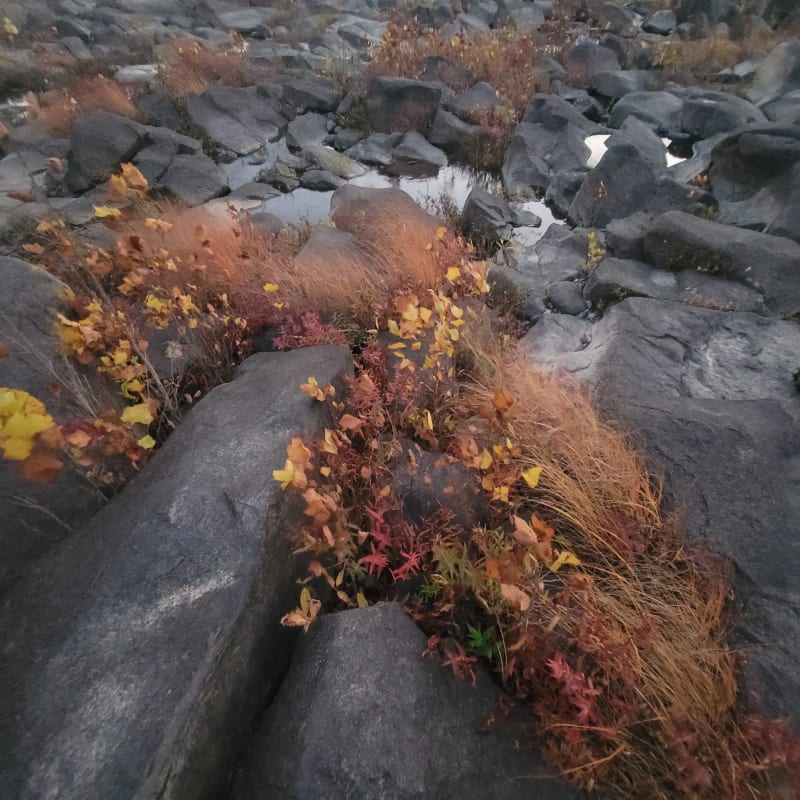
These large stones help shape the scour’s unique habitat
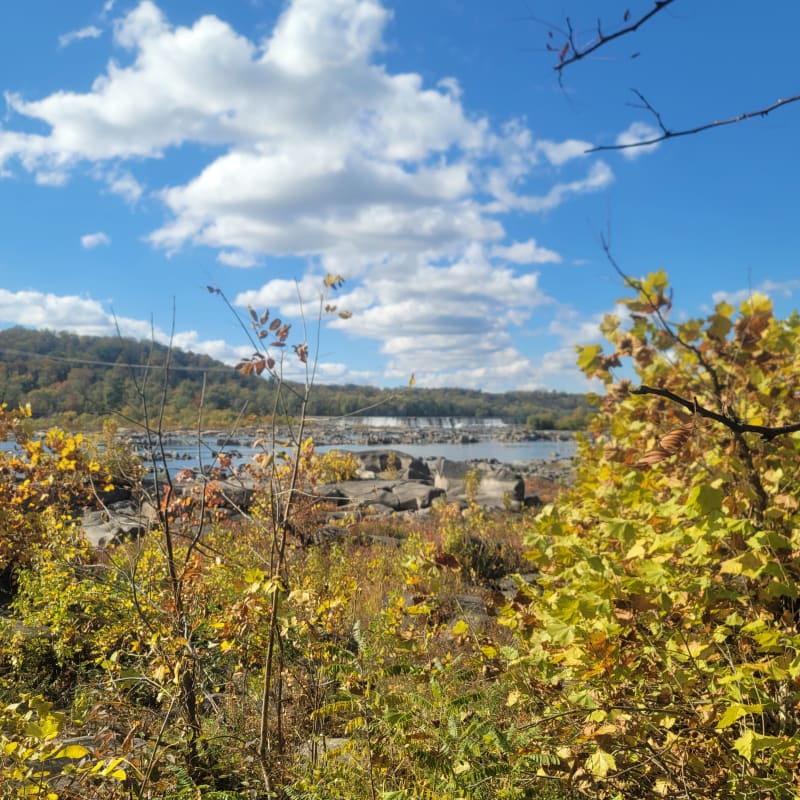
Rocks anchoring the river’s floodplain
I hope you’ve enjoyed taking a walk with me through a Susquehanna scour and may even go check one out yourself sometime. Should you decide to, please respect the sensitive habitat and be up to date on weather, as I’ve seen the scours turn to islands very rapidly, creating potentially dangerous foot travel. Be prepared for poison ivy and perhaps a tick, but most importantly, one great day with the living machine.