Polygaloides paucifolia
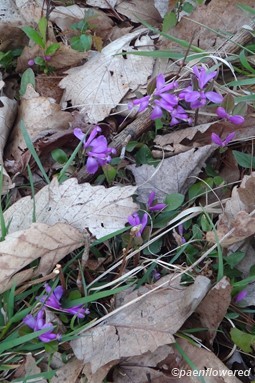
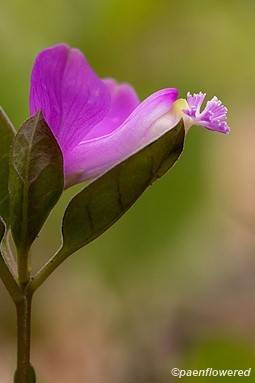
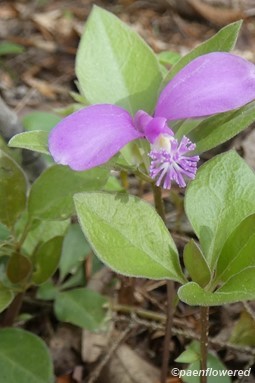
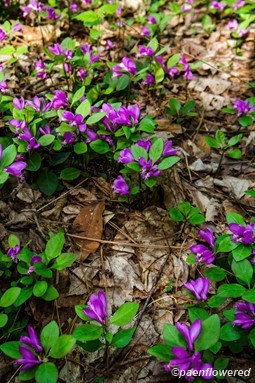
Pink flowers of this perennial herb have fringed petals
Polygaloides paucifolia fringed milkwort

 Synonyms:
Polygala paucifolia
Synonyms:
Polygala paucifolia
Add to MyPlants View Distribution
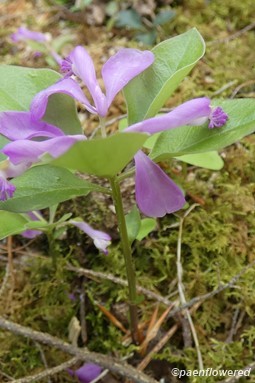
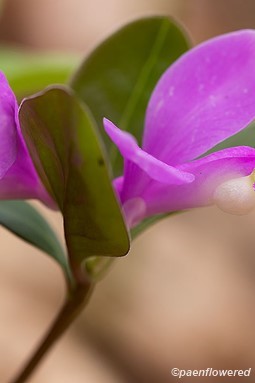
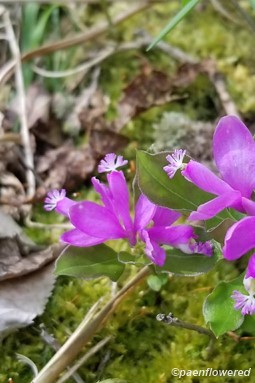
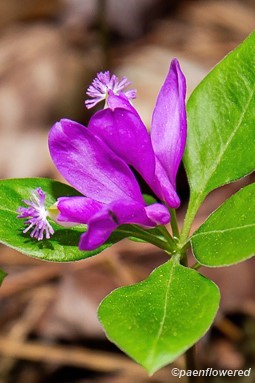
With flowers that resemble tiny pink airplanes, fringed milkwort spreads quietly across the eastern half of Canada and the northeastern United States, reaching south into the mountains of Tennessee and Georgia. In Pennsylvania, it is common throughout the state, except for a narrow band of westernmost counties where it has not been documented. This low, spreading perennial grows from slender underground rhizomes, producing delicate pink flowers tinged with purple and marked by a distinctive fringed middle petal. Later in the season, it also forms small, self‑pollinating, petal‑less flowers on very short stems at or near the ground.
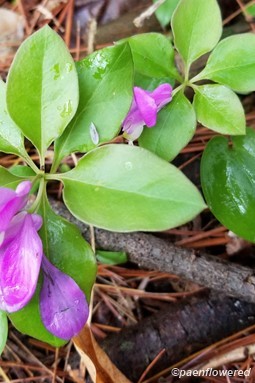
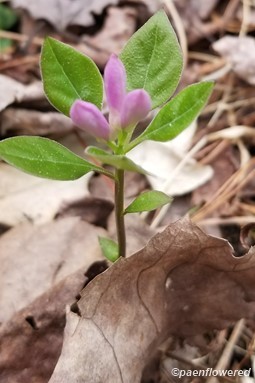
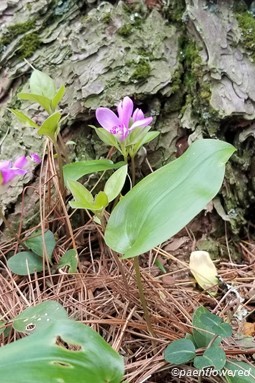
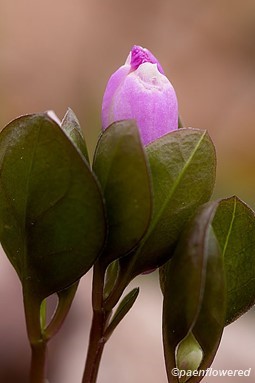
The leaves are simple, alternate, and toothless, varying from ovate to spatulate with blunt or pointed tips. Those near the base of the stem are smaller and stalkless, while the upper leaves have slender stalks about half as long as the leaf blade. Toward the top of the flowering stem, the upper three to six leaves become larger and crowd together, creating the appearance of a loose whorl beneath the flower, though not a true whorl.
Serving a double purpose, the fringed middle petal opens when bees or other insects land on it, giving them access to nectar and pollen. After flowering, ants are drawn to the nutrient‑rich appendage on the seeds and help disperse them, carrying them back to their nests and into new locations. Fringed milkwort grows in thin, acidic soils, often under pines and in forest openings, glades, meadows, and fields, and is considered rare in some states. Nature‑lovers delight in finding colonies of this bright, distinctive wildflower.
Historically, fringed milkwort was noted to contain a component believed to increase milk production in dairy cattle. It also held a place in traditional medicine: Iroquois Medical Botany (James Herrick, 1977) records its use for treating skin inflammations such as abscesses, boils, and sores.
Habitat & Range
Common in dry to moist rich woods, often in acidic soils under conifers. Prefers partial to full shade and moist, well-drained soil.
Common througout the state, except a narrow band of westernmost counties.
Range: Native to eastern half of Canada and the northeastern United States, reaching south into the mountains of Tennessee and Georgia.
| EMP: | FACU |
|---|---|
| NCNE: | FACU |
Phenology
Flowers late April through June. Bloom duration is 2 to 3 weeks.
Fruits June to September.
Characteristics
Inflorescence terminal reduced raceme; 1 to 4 flowers per plant, usually only the top flower fully developed
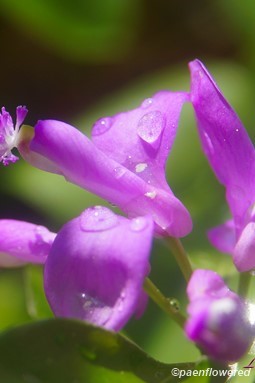
Flowers rose-purple; two large petal‑like sepals forming flaring wings, three smaller outer sepals; corolla of three fused petals ending in a fringed keel
Leaves simple, alternate, entire; ovate to spatulate with blunt or pointed tips; upper 3-6 leaves larger and crowded, appearing as a whorl beneath the flower;
Stems smooth, slender, arising from creeping rhizomes; flowering stems ascending, simple
Fruit oval to nearly round capsule; 2-seeded; 1.5-3mm long
Height 4 to 6 inches
Plant Codes
S-rank: S5 (Secure)
G-rank: G5 (Secure)
Ecology
Very small insects such as bees, flies, and small butterflies visit the flowers for nectar and pollen.
The plant is not typically browsed by deer or rabbits and provides little forage value for larger wildlife.
Ants aid in dispersing the seeds, attracted to the nutrient‑rich appendage.
Polygaloides paucifolia fringed milkwort
Add to MyPlants View Distribution

Comments
Have you spotted this plant in your area? We'd love to hear about your experience! Share your comments or questions about the plant below. Comments are moderated before posting.